

Millions of shoppers wake up early the morning after Thanksgiving to hunt for deals in stores and online. Plumbers, on the other hand, get an early start for another reason: Brown Friday.
In the world of plumbing and wastewater, the day after Thanksgiving is historically the single busiest service day of the calendar year, earning the moniker “Brown Friday.”
Plumbing company Roto-Rooter has even reported receiving about 50% more service calls on Brown Friday than on the average Friday throughout the year.
What Causes the Brown Friday Surge in Plumbing Service?
Across the country, holiday feasts, extra houseguests and overworked pipes collide to create a perfect storm of clogged sinks, overflowing toilets and backed-up sewer mains.
Before you fire up the garbage disposal or reach for a sanitizing wipe to clean up holiday leftovers, think about these simple disposal instructions to help prevent plumbing catastrophes this holiday season — and help your local plumbers keep at least one household off their Brown Friday list.
The Culprits in the Kitchen: Prevent FOG from Clogging Pipes
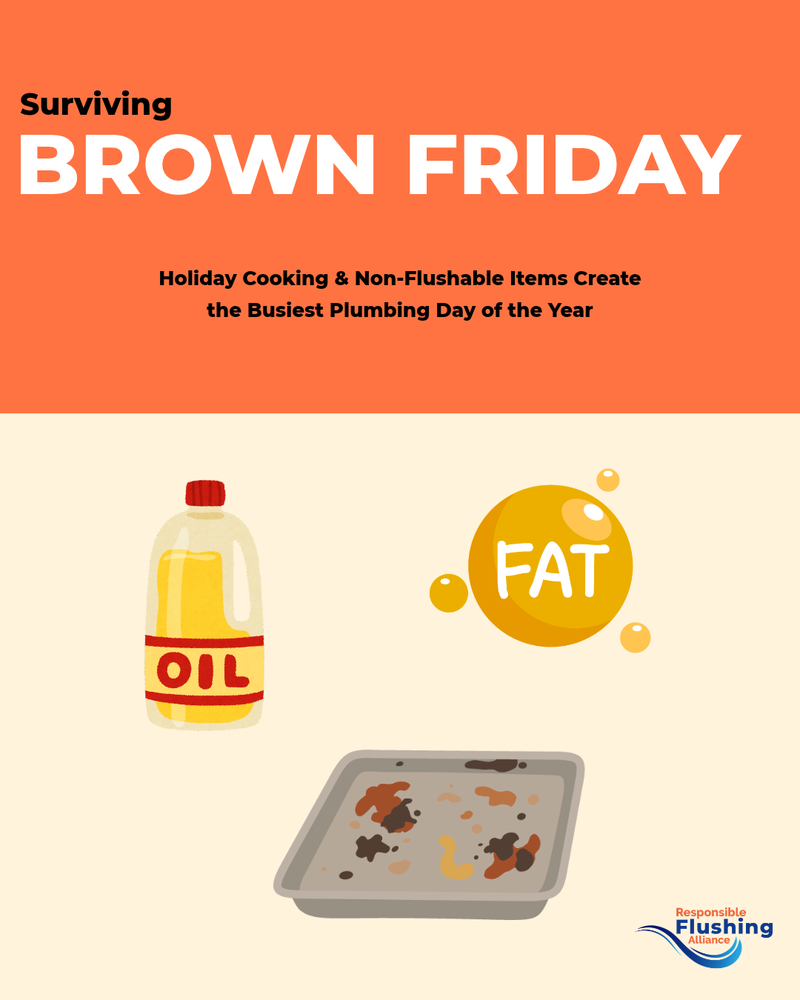
Thanksgiving menus are packed with rich, savory holiday staples: roasted turkey, glazed ham, buttery mashed potatoes and rich gravies. Behind all that holiday culinary delight, however, lurks a hidden drain scrooge: FOG (fats, oils and grease).
Common holiday FOG include:
- Meat drippings from carved turkey, roast beef or ham
- Cooking oils (canola, vegetable, olive, peanut, etc.)
- Gravy and cream-based sauces
- Melted butter and margarine
- High-fat dairy products (heavy cream, sour cream)
While FOG may slide down your kitchen sink as warm liquids, they quickly cool and solidify inside your home’s drain lines and municipal sewer pipes. As the congealed goop accumulates along pipe walls, it grabs onto food scraps and debris. These stubborn masses can grow into thick blockages known as “fatbergs.” Fatbergs restrict water flow, cause sluggish drainage, lead to foul-smelling sink backups and can even trigger municipal sewer line overflows into streets and local waterways.
Keeping your drains clear of FOG this Thanksgiving is straightforward if you follow three golden rules:
- Scrape: Before washing plates, roasting pans and serving dishes, scrape all leftover food scraps, bones and fat directly into the trash can (or compost bin, if recommended for home composting) — not the garbage disposal or other drains.
- Wipe: Use a paper towel to wipe out excess oil and grease film from pots, pans and baking dishes before rinsing them. Toss the soiled paper towel into the trash.
- Collect: For larger volumes of liquid grease (like turkey drippings or fryer oil), never pour it down the drain. Pour it into a heat-resistant disposable container, such as an empty coffee can. Allow it to cool and solidify completely, then throw the container away.
The Potty Perpetrators: Flush Responsibly to Protect the Plumbing
With a house full of holiday guests and endless post-meal cleanup, trash can quickly end up in the wrong places. Common household items often mistakenly flushed during the holidays include:
- Cleaning and disinfecting wipes
- Paper towels
- Holiday items like wrapping and tissue paper
- Food scraps
- Facial tissues
These items and many more should always go in the trash (or compost, where applicable) and never the toilet. Items like food scraps can contribute to the FOG mentioned above. Most household wipes (disinfecting wipes, baby wipes, makeup wipes, etc.) are designed to be durable, not to break apart in water like toilet paper and flushable wipes. And wrapping paper, tissue paper and other holiday items were never designed to go down the drain.
To keep flushing smart simple for you and your guests, remember:
- Follow the disposal instructions. Always look for the Do Not Flush symbol on wipes packaging. If you see it, trash it — never flush it.
- Stick to basics. Only flush human waste, toilet paper and wipes specifically labeled as flushable.
- Prepare the bathroom. Ensure your guest bathroom has a clearly visible, lined wastebasket so visitors don’t feel compelled to flush facial tissues, non-flushable wipes, hygiene products or other trash.
Protect Your Home and Community Infrastructure
Keeping FOG out of the kitchen sink and non-flushables out of the toilet isn’t just about avoiding a steep holiday plumbing bill.
It also helps protect your municipal wastewater treatment infrastructure from unnecessary strain, prevents raw sewage backups into public streets and preserves local waterways.
This Thanksgiving let’s be grateful for family, friends, food and flushing smart.