

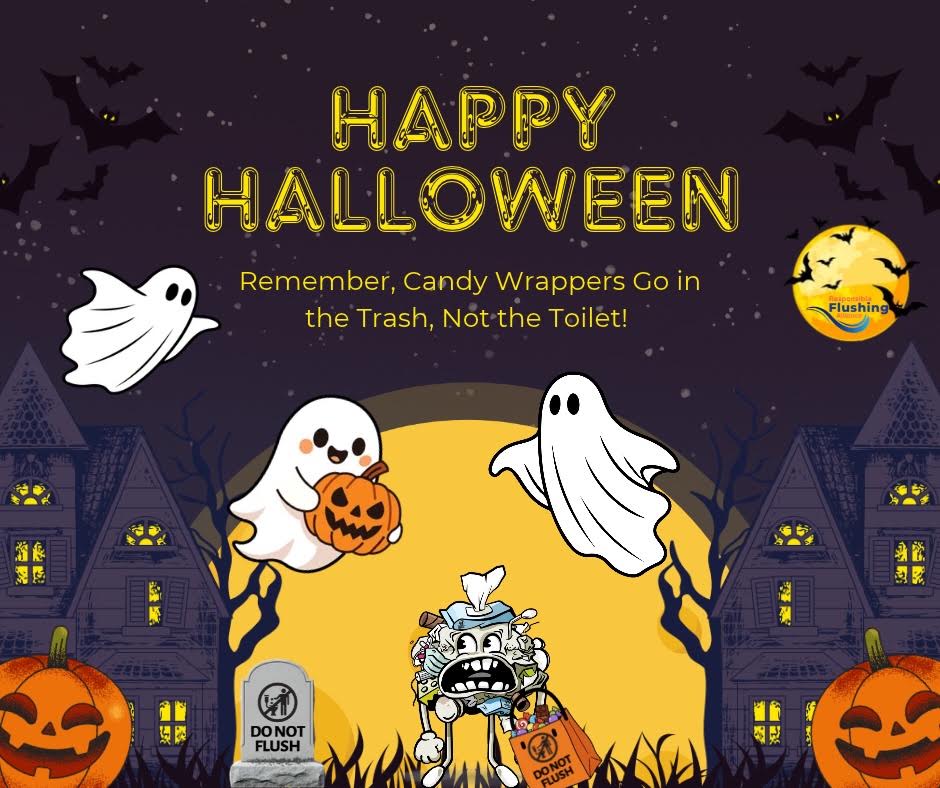
Keep the scares in the haunted house, not your pipes.
Ghosts, goblins, and things that go bump in the night are all part of the Halloween fun. But there’s one fright nobody wants this spooky season: a clogged toilet, a messy sewage backup, or an expensive plumbing repair bill – now that’s downright terrifying.
Before you start handing out candy or hosting your Halloween bash, the Responsible Flushing Alliance (RFA) has a few tricks to help keep your pipes flowing and your wallet safe from a plumbing nightmare.
The Frightening Truth About What's Being Flushed
You might be surprised by the scary stuff lurking in our sewer systems. And yes, we are talking about what makes the Clog Monsters, aka fatbergs!
In the largest U.S. sewage collection study, researchers examined 1,745 items recovered from wastewater systems. The chilling discovery? More than 99% of the items collected were materials that shouldn’t have been flushed in the first place!
Here’s what they found:
- 65% were other non-flushable items, including paper towels, period products and everyday trash, such as food and candy wrappers (2%).
- 34.1% were non-flushable wipes, such as baby wipes, cleaning wipes and makeup removal wipes.
- Just 0.9% were wipes labeled as flushable, which are specifically engineered to break down in water and were in the process of falling apart but were stuck to the other items.
The real horror story? When trash and non-flushable wipes go down the toilet, they can contribute to stubborn clogs, messy backups and costly plumbing repairs. And who has hundreds or thousands of extra dollars to spend on a wrong flush?
Three Tricks to Avoid a Plumbing Nightmare
1. Keep Candy Wrappers Out of the Toilet Zone
Halloween candy belongs in your belly, and wrappers belong in the trash!
Even tiny wrappers can contribute to big problems when they make their way into plumbing and sewer systems. Whether you’re sorting through trick-or-treat treasures or cleaning up after a party, make sure candy packaging goes straight into the garbage.
2. Don’t Let Non-Flushable Wipes Become Home Pipe Clog Monsters
Removing your spooky Halloween makeup? Before tossing that makeup removal wipe into the toilet, check the packaging.
Baby wipes, cleaning wipes, and makeup removal wipes are designed to stay strong when wet, not break apart in water and are required to be labeled with the Do Not Flush (DNF) symbol. DNF wipes always go in the trash and never the toilet!
Wipes specifically labeled as flushable, on the other hand, are engineered to break down in water, much like dry toilet paper. Flushable wipes are meant to be a replacement for, or supplement to, dry toilet paper.
3. Treat Your Toilet Like a Toilet, Not a Trash Can
Paper towels, cotton swabs, period products, dental floss, and other bathroom trash have no business taking a trip down your toilet.
Keep a small wastebasket in the bathroom so everyone in your household can dispose of these items properly.
Remember, just because something disappears with a flush doesn’t mean it’s gone for good! Once you flush, your items head down to your wastewater treatment facility where non-flushable items can cause severe equipment damage. The cost to repair equipment, estimated to be $440 million per year nationally, is typically passed on to you, the rate payer. Now that is scary!
Scare Away Clogs, Not Your Savings
A little prevention can save you from a truly frightening surprise. A plumbing visit to clear a stubborn clog can cost hundreds of dollars, while extensive damage from a sewage backup can run into the thousands.
This Halloween, make sure the only monsters you’re dealing with are the ones knocking on your door for candy.
Look for the Do Not Flush symbol, follow packaging instructions, and when in doubt, throw it out!
For more tips on protecting your pipes and avoiding scary plumbing surprises, visit FlushSmart.org. And here’s a spook-tacular Halloween infographic!

Happy Halloween from the Responsible Flushing Alliance! 🎃
#FlushSmart
Frequently Asked Questions
Is it safe to flush baby wipes?
No. Baby wipes are made with long and strong fibers that are meant to be durable and do not break down in water. They are clearly marked with the Do Not Flush symbol.
Are some baby wipes labeled as flushable?
No. Baby wipes are made with long and strong fibers that are meant to be durable and do not break down in water. They are clearly marked with the Do Not Flush symbol.
Are flushable wipes really flushable?
Yes. Wipes clearly labeled as flushable are typically sold next to dry toilet paper. They are made with short, plant-based fibers that are engineered specifically to break down in water like toilet paper. Flushable wipes have one purpose: for use as a replacement for, or supplement to, dry toilet paper.
Would flushing a candy wrapper really cause an issue?
Yes, it certainly could. Even if a wrapper passes through your home plumbing system, it then travels through the sewers to the sewage treatment plant. Along the way it can come into contact with fats, oils, and grease (FOG) and other non-flushable items. This can form a cement-like fatberg.
Watch this short video reel to see the consequences of “just one” unfortunate flush:
What happens to items that go from the sewer pipes to the wastewater treatment facility?
Check out this short video as we took a “behind the drains” tour at the Orange County (CA) Sanitation District: