

At the Responsible Flushing Alliance (RFA), we champion smart flushing habits, and that starts with understanding what you’re flushing. From a wipes disposal standpoint, there are essentially two general categories of wipes – flushable and non-flushable wipes. However, it can be daunting to know what can and cannot be flushed. After all, the answer has to do with the nitty gritty science of how each wipe is developed and designed.
Baby Wipes are Not Flushable
Baby wipes are essential for diaper changes and make up the largest segment of wipes sold in the U.S. at 33%; however, baby wipes are not designed to be flushed. Baby wipes are made with long fibers and are meant to be super soft on a baby’s skin, yet very durable for completing the task at hand in a sanitary fashion. Mistaking baby wipes as flushable could come at a high cost in the form of broken plumbing and even damaging sewage backups in your community.
Other common household wipes that should never be flushed include surface cleaning wipes and makeup removal wipes. Fortunately, non-flushable wipes commonly used in the bathroom are required by law to prominently display the Do Not Flush symbol on the front of the package. This makes identifying disposal instructions easy because we know from consumer surveys that product packaging is the No. 1 place people look for disposal information. If you see the Do Not Flush symbol, always put those wipes in the trash and never the toilet!
Another helpful way is to think about where exactly in your local grocery or drug store people typically find these types of wipes.
Find Flushable Wipes in the Toilet Paper Aisle
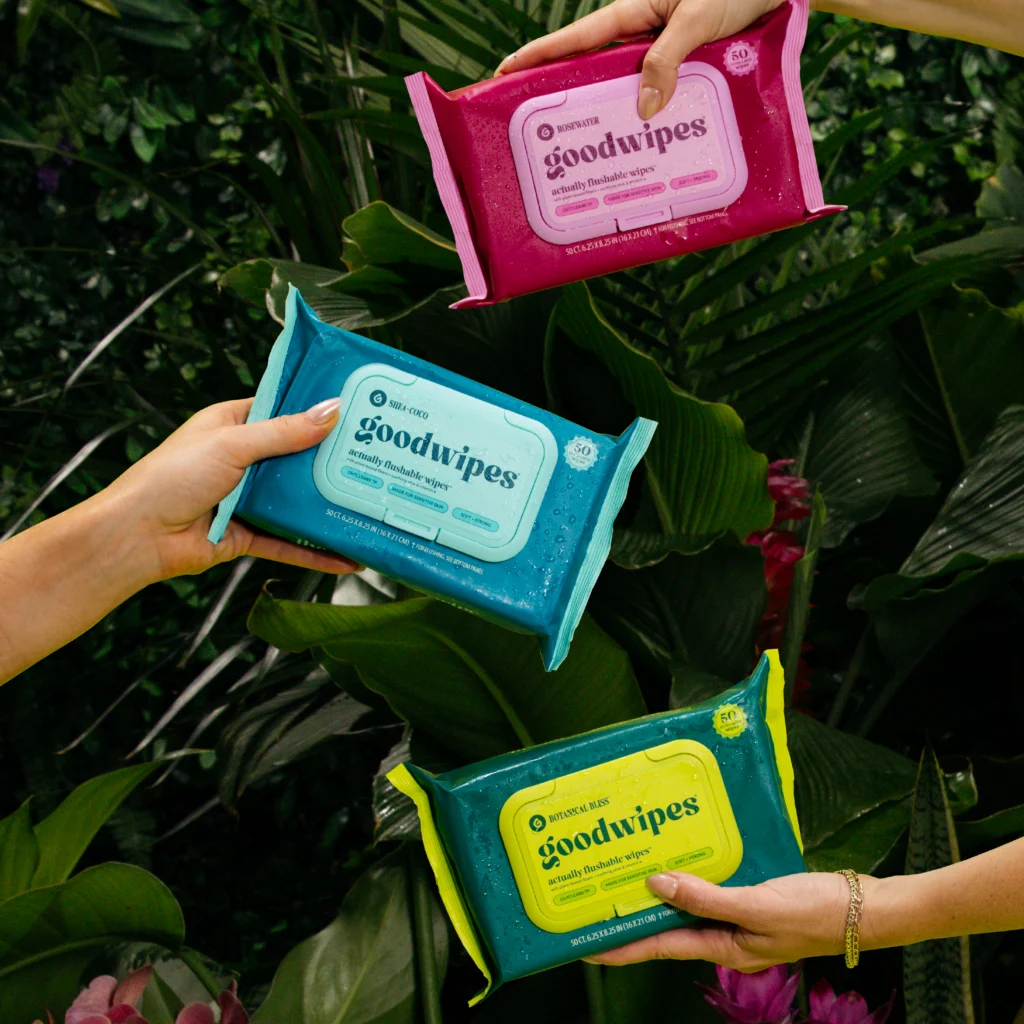
When you’re looking for flushable wipes, you’ll typically find them right alongside toilet paper. This is because flushable wipes, often described as “moist toilet tissue,” are meant to be used as a supplement to or replacement for dry toilet paper.
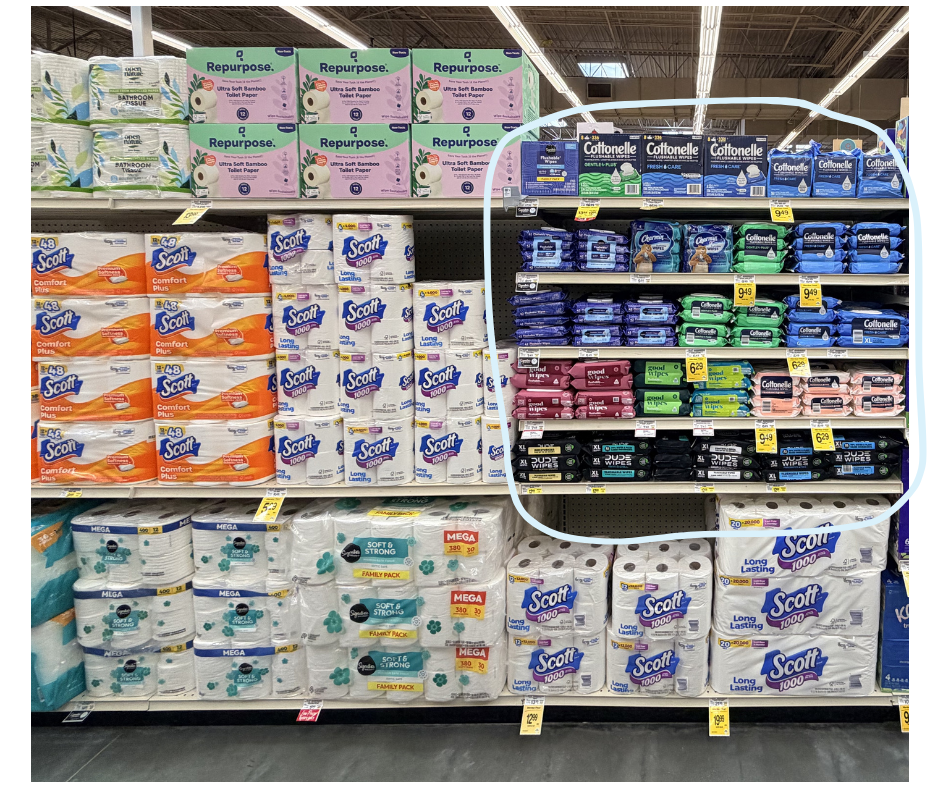 Flushable wipes are found next to dry toilet paper at this Pavilions grocery store in San Clemente, CA. Flushable wipes are made with short, plant-based (never plastic) fibers and are engineered to disperse in water similar to dry toilet paper.
What makes flushable wipes flushable? They are designed with short, plant-based fibers that are loosely bound. This specific construction allows them to be strong enough for effective cleaning, yet, critically, engineered to disperse quickly when agitated in water (similar to dry toilet paper). For a wipe to earn the “flushable” label, it must undergo and pass a series of rigorous industry flushability tests that simulate real-world conditions in plumbing and sewage systems.
Find Baby Wipes in the Diaper Aisle
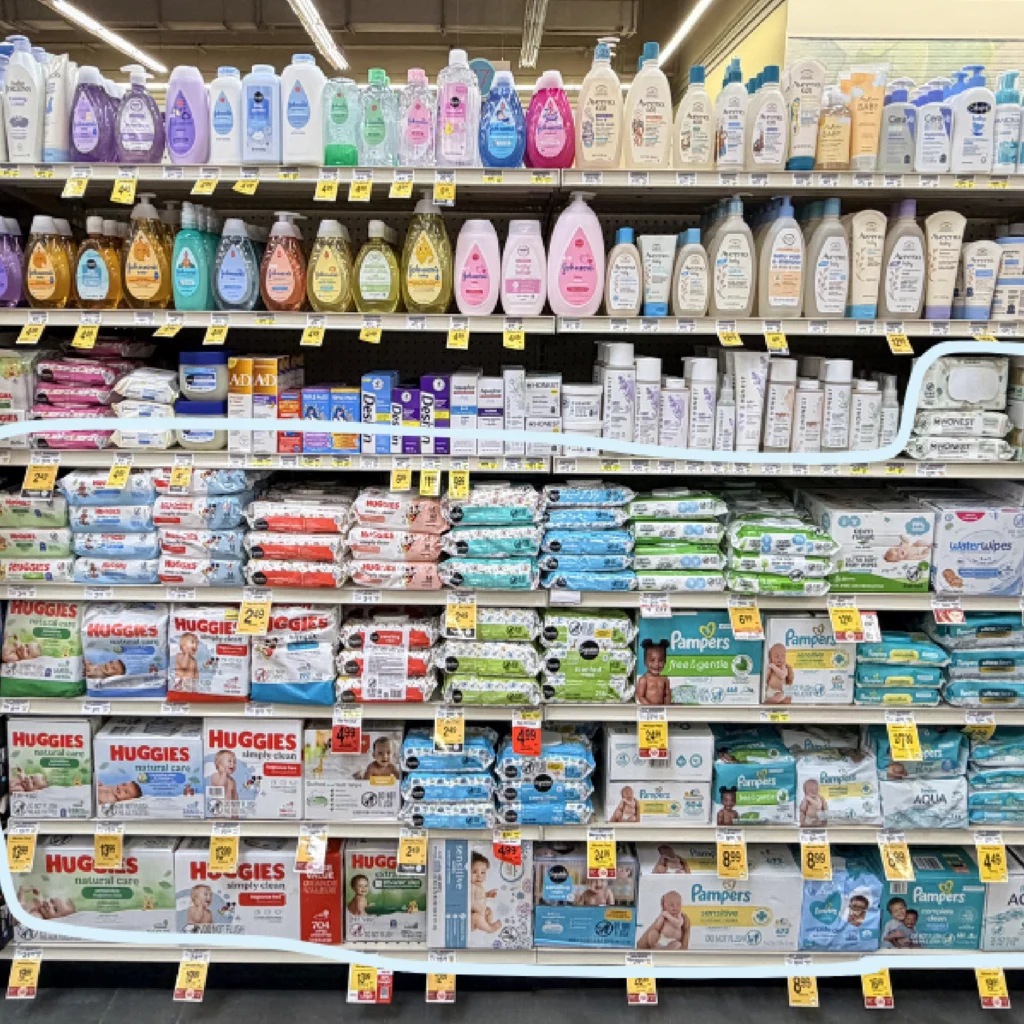
Baby wipes, on the other hand, are in the diaper aisle. Like baby diapers, baby wipes are built for durability to handle tough messes, which makes them entirely unsuitable for flushing.
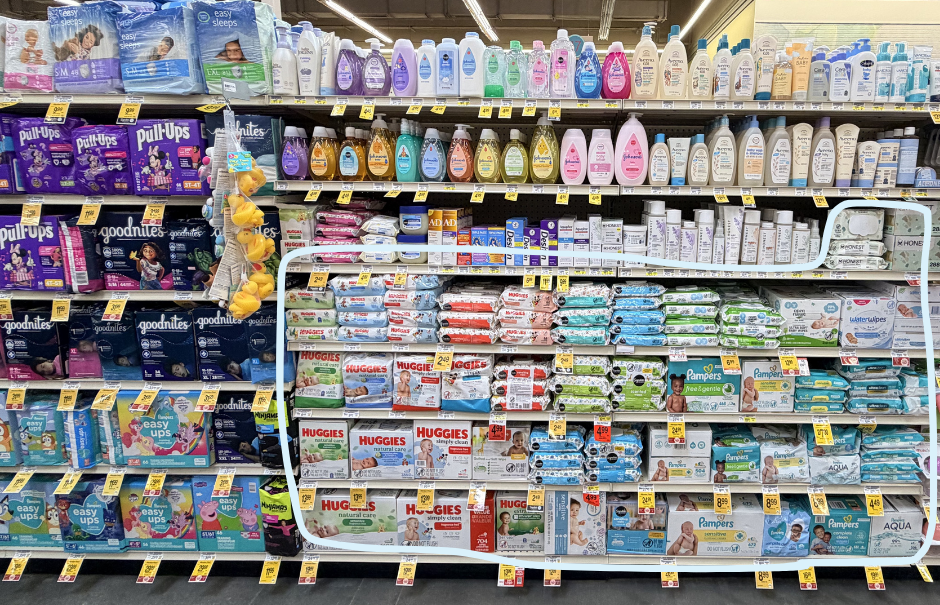 Baby wipes are found on the baby aisle, along with diapers and other baby care items at this Pavilions in San Clemente, CA. Baby wipes are never flushable and feature the Do Not Flush symbol on the front of the packaging.
As mentioned, baby wipes are made with longer fibers that are more tightly bonded together. While this construction helps them hold up well for wiping a baby, it also means they will not break down in water. Attempting to flush them can lead to problems, as they retain their structure and can easily contribute to blockages in your home’s plumbing or further along in the sewer system.
Surface cleaning or sanitizing wipes (found near other household cleaning products) and makeup wipes (you guessed it — usually found in the beauty/makeup aisle) are similarly designed for softness and/or durability and should never be flushed.
Knowing the Difference Makes a Difference
The distinction between flushable wipes and their non-flushable counterparts like baby wipes isn’t just about labels; it’s about safeguarding our infrastructure, protecting our environment, and preventing costly, frustrating plumbing disasters in your home. By knowing the difference, and flushing (or not flushing) accordingly, you become an active participant in maintaining healthy pipes and wastewater systems.
“At the Responsible Flushing Alliance, we know that smart flushing habits start with having the right information,” said Lara Wyss, president of RFA. “Non-flushable wipes represent about 90% of wipes sold in the U.S., making it very important to always look for the Do Not Flush symbol. Flushable wipes are about 10% of wipes sold, cannot include plastic fibers, are made with short, plant-based fibers, and pass flushability standards (IWSFG) developed by wastewater agencies.”
For more detailed insights and to learn from an expert about the science behind flushability, check out this article in H2O Global News featuring an interview with Paul Davies, a polymer chemist.
Lastly, if you’re looking for an interesting deep dive into the science and engineering behind flushable wipes and how they’ve become the target of much scrutiny, listen to this episode of the Search Engine podcast to explore flushability from multiple perspectives.