
The Facts on Flushing
What’s the Big Deal About a Toilet Flush?
Responsible flushing prevents clogs, protects our environment and public health, and saves money on repairs to your plumbing system and our community’s wastewater infrastructure.
- On average, it costs about $300-$450 to repair the damage to home plumbing systems caused by clogs. And if it requires a whole-house repipe, the average cost can range from $4,000-$15,000.
- Flushing the wrong wipes costs the U.S. more than $440 million a year to repair wastewater equipment damage— a price that typically gets passed down to the utility ratepayer.
- The EPA estimates there are at least 23,000 – 75,000 SSOs (sanitary sewer overflows) per year (not including sewage backups into buildings) in the U.S.
What’s Really Causing Clogs?
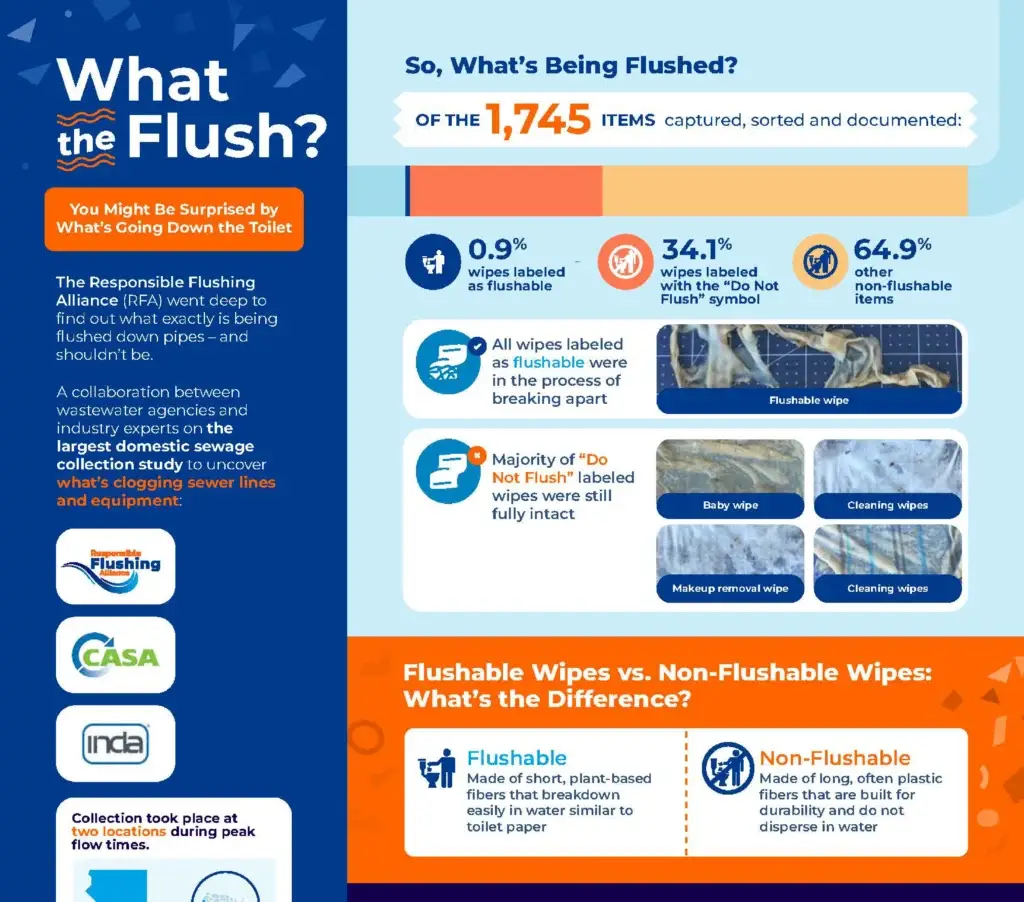
The most comprehensive sewage collection study to date, conducted at two wastewater treatment facilities in California, found that 34.1% of items collected were wipes labeled with the Do Not Flush symbol. This confirms that proper labeling of wet wipes laws require the correct types of wipes for labeling with the Do Not Flush symbols.
Additionally, all of the non-flushable items found in the study were fully intact! Other items found in the study include paper towels (53%), period products (7%), and trash (5%). Less than 1% of the items in the study were fragments of wipes labeled as flushable. They were in the process of disintegrating and attached to non-flushables, meaning they were doing their job by breaking down. Overall, 99% of the materials collected from clogs at the wastewater treatment facilities were items that are not meant for flushing.
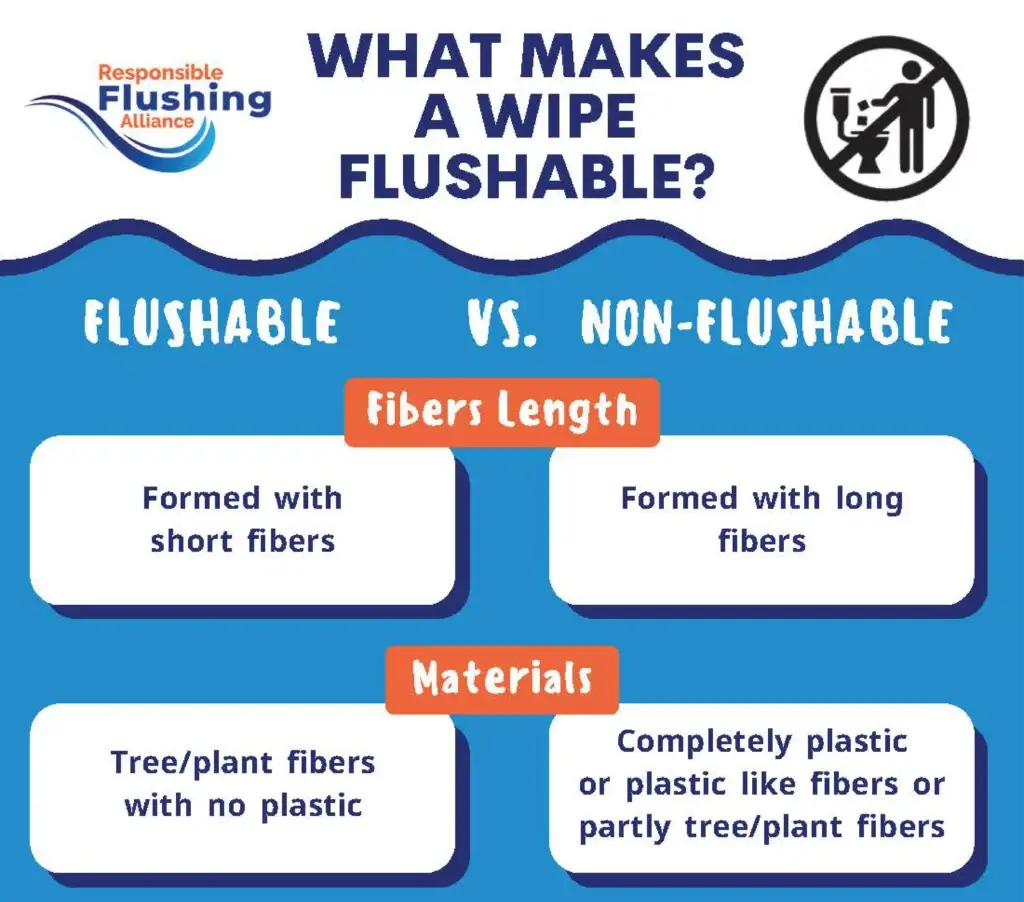
- Do Not Flush (non-flushable) wipes are made of long fibers that are built for durability but do not break down in water.
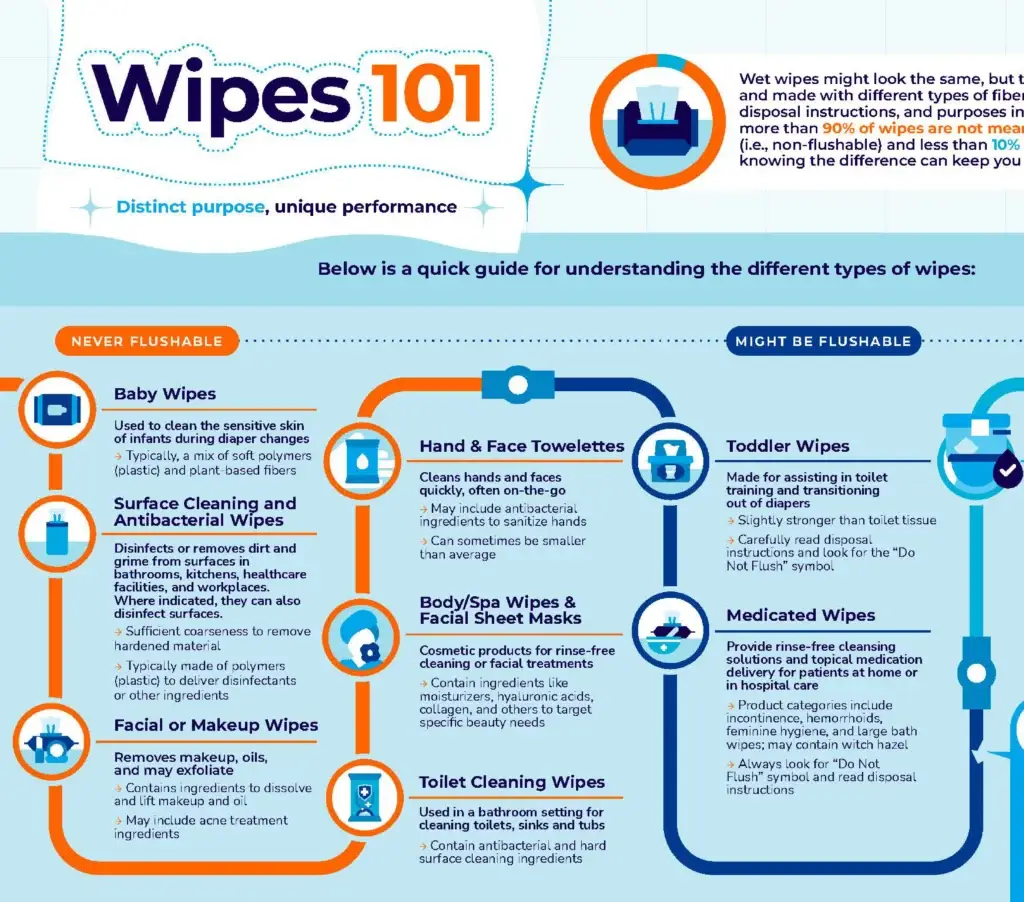
- Laws requiring wet wipes to be labeled with the Do Not Flush symbol include all baby wipes and wipes with petrochemical-based fibers that are likely to be used in the bathroom. This includes household cleaning, makeup removal, and body wipes (among others). These types of wipes can never be labeled as flushable.
- Flushable wipes do not require the Do Not Flush symbol as they are made of short, plant-based fibers that are engineered to break down easily in water, similar to dry toilet paper. Flushable wipes undergo flushability testing, including IWSFG or GD4.
What do flushing habits in the United States look like today?
What Is a Fatberg?
The name fatberg is a combination of fat + iceberg. A fatberg is the combination of fats, oils, grease, and other items not meant for the toilet or drain.
These giant, cement-like masses form in sewer pipes when cooking grease congeals and combines with products that get stuck in it, making them grow very large (like a long iceberg) as more items clog and accumulate. That is why it is important to know what not to flush down the toilet or pour down any drain.
So, What Should I NOT Flush Down the Toilet?
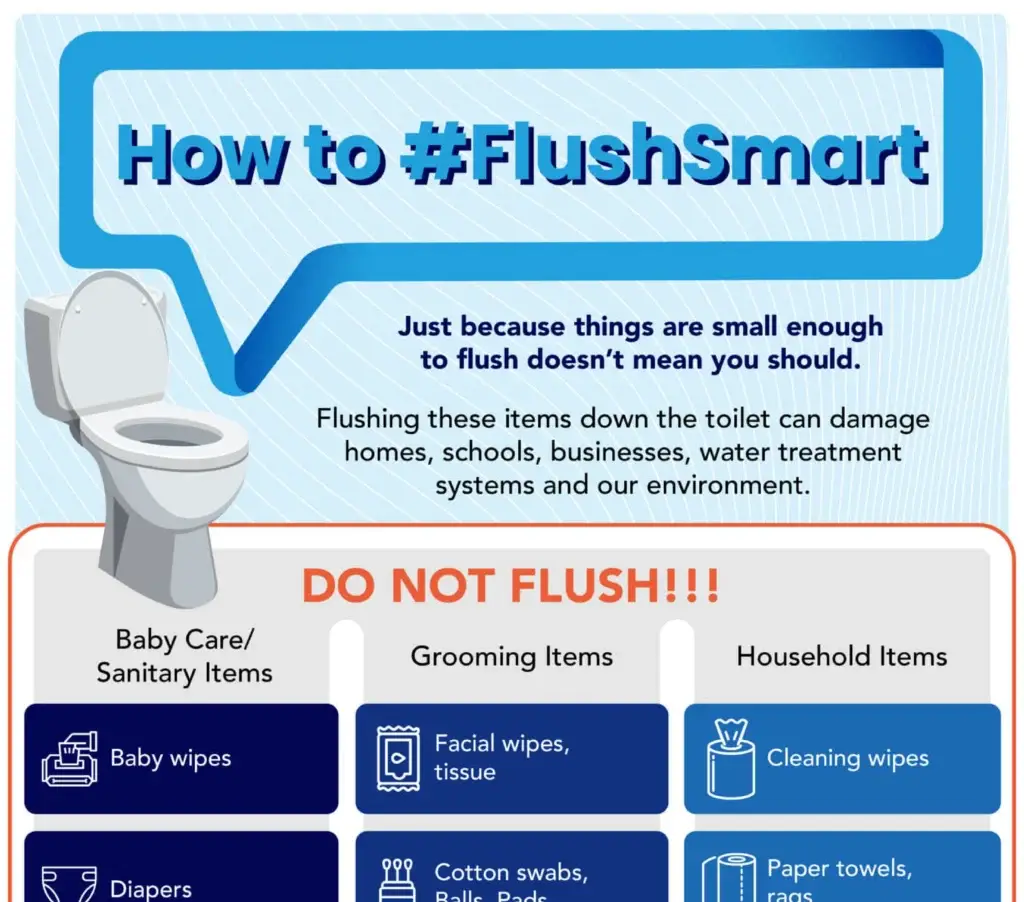
- Baby Wipes or Household Cleaning Wipes
- Paper Towels, Facial Tissue, Makeup Wipes
- Fats, Oils, Grease
- Food, Trash, Plastic Bags
- Rags, Cloth, Disposable Gloves
- Cotton Balls, Cotton Swabs, Dental Floss
- Feminine Products
- Hair/Hair Weaves
- Medications/Syringes
What do flushing habits in the United States look like today?
While there’s still work to do, RFA data confirms our efforts are working. Indicators of people flushing non-flushable items are decreasing, and awareness of the Do Not Flush symbol is increasing.
More Flushing Facts
18,077 views May 29, 2018 If you flush your toilet in Columbus or any neighboring community, your waste likely goes to the Southerly Wastewater Treatment Plant on Rt. 23 south of town. Here’s what happens at the huge site.